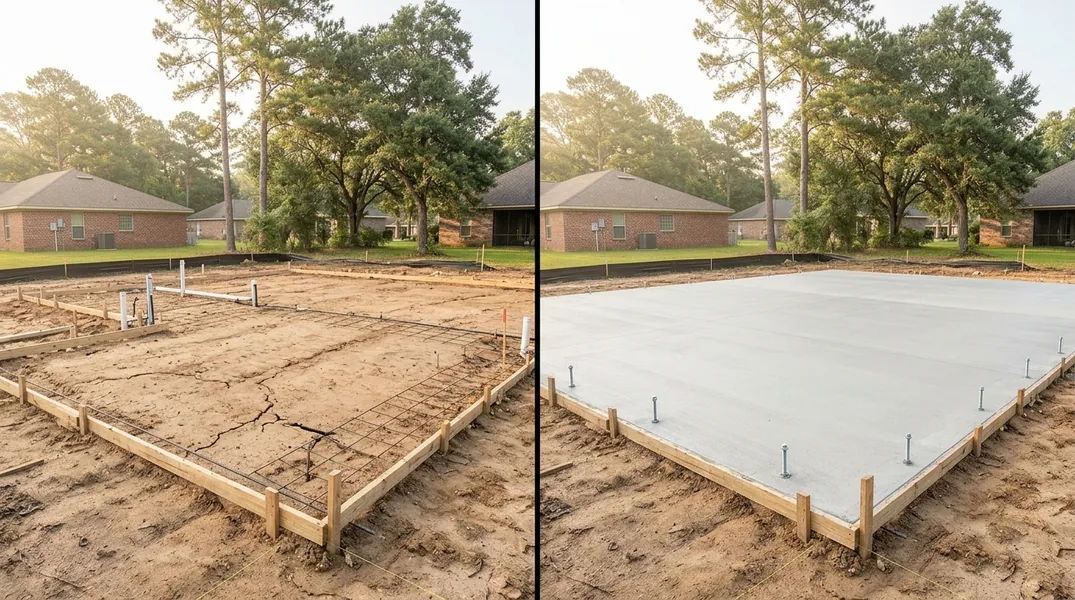
Understanding New Construction Concrete Slabs in Jackson, MS
Buying a new construction home in Jackson is an exciting milestone, but it comes with responsibilities that many first-time buyers overlook. One of the most critical components of any new home is the concrete foundation slab, yet it's often one of the least understood. Your slab supports everything above it: the walls, roof, HVAC systems, and all your belongings. If the foundation is compromised, you're looking at potentially catastrophic structural issues down the road.
New construction concrete slab quality varies significantly depending on the builder, soil conditions, and construction practices used. In the Jackson area, where we experience humid summers and occasional ground movement, proper slab construction and inspection become even more critical. Before you sign closing documents, you need to understand what constitutes a properly installed slab and what red flags should concern you.
What to Look for During a Builder Slab Inspection
A builder slab inspection should happen before closing, ideally with a qualified inspector who understands local soil conditions and construction standards. Start by walking the entire perimeter of the foundation and looking for visible cracks. While hairline cracks are common and often not problematic, wider cracks (more than one-eighth inch) or cracks that run diagonally should raise concerns. Pay special attention to cracks near corners, windows, and doors, as these are stress points where movement is most likely to occur.
Check for signs of water intrusion or moisture damage in the basement or crawl space. Look at the concrete surface itself: it should be relatively smooth and level. Use a straightedge or your eyes to spot significant slopes or uneven areas that might indicate settling or improper finishing. Inspect the perimeter where the slab meets the foundation wall, checking for gaps or separation that could allow water or pests to enter. Don't hesitate to ask your builder for documentation of soil testing, concrete mix design, and curing conditions. Reputable builders will have this information readily available and should be willing to discuss their quality assurance processes with you.
New Home Foundation Warranty: What's Actually Covered
Most builders offer a new home foundation warranty, but these warranties are not created equal, and the devil is definitely in the details. A typical builder's warranty covers structural defects in the foundation for a period of one to ten years, depending on the builder and the specific warranty program. However, many warranties explicitly exclude cosmetic cracks, minor settling, or damage caused by soil conditions, drainage issues, or homeowner negligence. Before closing, request a complete copy of your foundation warranty and have it reviewed by a qualified professional or attorney if necessary.
It's important to understand the difference between a builder's warranty and a structural warranty from a third-party provider. Some builders purchase additional structural warranties from companies that specialize in home defect coverage. These third-party warranties often provide more comprehensive protection and are backed by insurance, making them more valuable if a serious issue arises. Ask your builder whether they carry a third-party structural warranty and request documentation. Additionally, inquire about what happens if the builder goes out of business or becomes unreachable. A third-party warranty provides recourse even if the original builder is no longer operating.
Madison County New Build Concrete: Local Soil and Climate Considerations
Madison County and the surrounding Jackson area have specific soil characteristics that affect concrete slab performance. Our region experiences clay-heavy soils that expand and contract with moisture changes, particularly during our humid summers and occasional dry spells. This natural movement can stress concrete slabs if they're not properly designed and installed. Builders familiar with local conditions should account for this by using appropriate concrete mixes, proper reinforcement, and adequate base preparation.
The climate in Madison County also means your slab will experience significant temperature swings and moisture exposure. Mississippi's humid subtropical climate can accelerate concrete degradation if the slab wasn't finished with proper sealing or if drainage around the foundation is inadequate. Before closing, verify that your builder has addressed drainage concerns around the perimeter of the slab. Water pooling against the foundation is a major red flag that can lead to moisture intrusion, mold, and structural damage. Ask your builder about their drainage plan and whether gutters and downspouts have been properly installed and directed away from the foundation.
When to Call in a Professional: Concrete Repair and Resurfacing Concerns
If your inspection reveals issues with the new construction slab, don't wait until after closing to address them. Some problems can be remedied by the builder before you take possession, while others may require professional evaluation and repair. This is where companies like Jackson Concrete become valuable partners. If you notice significant cracks, uneven surfaces, or other structural concerns, Concrete Repair & Resurfacing specialists can assess whether the issues are cosmetic or structural and recommend appropriate solutions.
In some cases, minor surface imperfections might be addressed through resurfacing or polishing. In other cases, the builder may need to cut out and replace sections of the slab. Having a professional assessment on record before closing gives you documentation and leverage in negotiations with the builder. If the builder refuses to address significant defects, you'll have expert testimony supporting your position. Don't rely solely on your general home inspector for concrete slab evaluation; consider hiring a structural engineer or concrete specialist for a focused assessment. The investment in a professional inspection now can save you tens of thousands of dollars in repairs later.
Key Questions to Ask Your Builder Before Closing
Before you sign closing documents, sit down with your builder and ask specific questions about your concrete slab. Request documentation of the concrete mix design, including the water-to-cement ratio and air entrainment specifications. Ask about the thickness of the slab and whether it includes reinforcement such as rebar or wire mesh. Inquire about soil preparation and whether the builder conducted soil testing or compaction verification. These questions aren't meant to be adversarial; they're simply ensuring that your builder followed industry best practices and can demonstrate their quality standards.
Ask about the curing process and how long the concrete was allowed to cure before construction continued above it. Request copies of any inspection reports or testing results from the concrete contractor. Find out what the builder's policy is for addressing defects discovered during the warranty period and whether they have a dedicated process for handling foundation concerns. Finally, ask for references from previous homebuyers in the area who can speak to the builder's track record with foundation quality. If your builder is reluctant to provide information or becomes defensive when asked these questions, that's a warning sign worth investigating further. A quality builder will welcome your diligence and provide clear answers.
Taking Action: Your Next Steps Before Closing
Don't let the complexity of new construction slabs intimidate you into skipping this critical step in the home buying process. Schedule a professional inspection at least two weeks before your closing date, allowing time for any issues to be identified and addressed. If you're in the Jackson area and need expert evaluation of your new construction slab, Jackson Concrete can provide a professional assessment and recommendations. Call us at (601) 500-5873 or visit our website to request a free estimate and consultation.
Document everything: take photos, keep inspection reports, and maintain copies of all correspondence with your builder. If issues are identified, get them in writing and ensure the builder agrees to specific remediation before closing. Remember, once you close on the home, you're responsible for the property, and addressing foundation issues becomes significantly more complicated and expensive. By taking a proactive approach now, you're protecting one of your largest investments and ensuring that your new home is built on a solid foundation, literally and figuratively.
Looking for a professional concrete contractor in Jackson? Jackson Concrete responds fast for all your concrete needs.
Get a Free QuoteOur services: Concrete Driveways · Concrete Patios · Stamped & Decorative Concrete